How Kara Vale Gave Her Creator A Voice

Daryl Dekking & Kara Vale (AI illustration provided by Daryl Dekking)
The story of Kara Vale is the story of an artist learning to be vulnerable through an invention — a conduit built from code, memory, and loss. It’s also a glimpse into what virtual artists can become when their creators treat AI not as a replacement for humanity, but as a frame that helps magnify it.
Kara Vale isn’t just a persona. She’s a conversation between two voices trying to heal, create, and belong. And that conversation is only getting started.
For Dutch data scientist and artist Daryl Dekking, AI has never been a shortcut or a substitute. It’s a collaborator.
“My work with AI has always been about collaboration, not replacement,” said Dekking. “Every song begins with a written story, a feeling, a question. AI helps me translate those emotions into new textures and sounds, but the heart of the music will always be human.”
That philosophy sits at the center of Kara Vale, his cinematic synth-pop persona whose rising profile — including a Future Sound Awards nomination — has transformed what began as a creative experiment into a deeply personal universe.
What makes Kara compelling isn’t just the music; it’s the emotional truth she carries, the world she occupies, and the way Dekking uses AI to bridge the gap between what he feels and what he can make.
What follows is the story of how Kara Vale was built, sung, refined — and eventually came to life — as told through Dekking’s reflections and Kara’s own in-character voice.
Designing a Synth-Pop Avatar
Kara Vale didn’t emerge fully formed; she appeared slowly, sparked by a single breakthrough. Dekking describes spending time learning Suno, creating early tracks he liked but didn’t feel ready to release. Everything shifted when he made the first version of the song “Paradise.”
“After creating the first iteration of the song ‘Paradise’, I realized there was something really special about that song, the structure and the dreamy vocals,” he said. “I started experimenting with a persona based on that song, which is how Kara Vale got started.”
From that point on, Kara became a lens, a character who allowed him to channel something more intimate than he felt comfortable expressing under his own name.
Visually and sonically, Kara is an extension of Dekking himself.
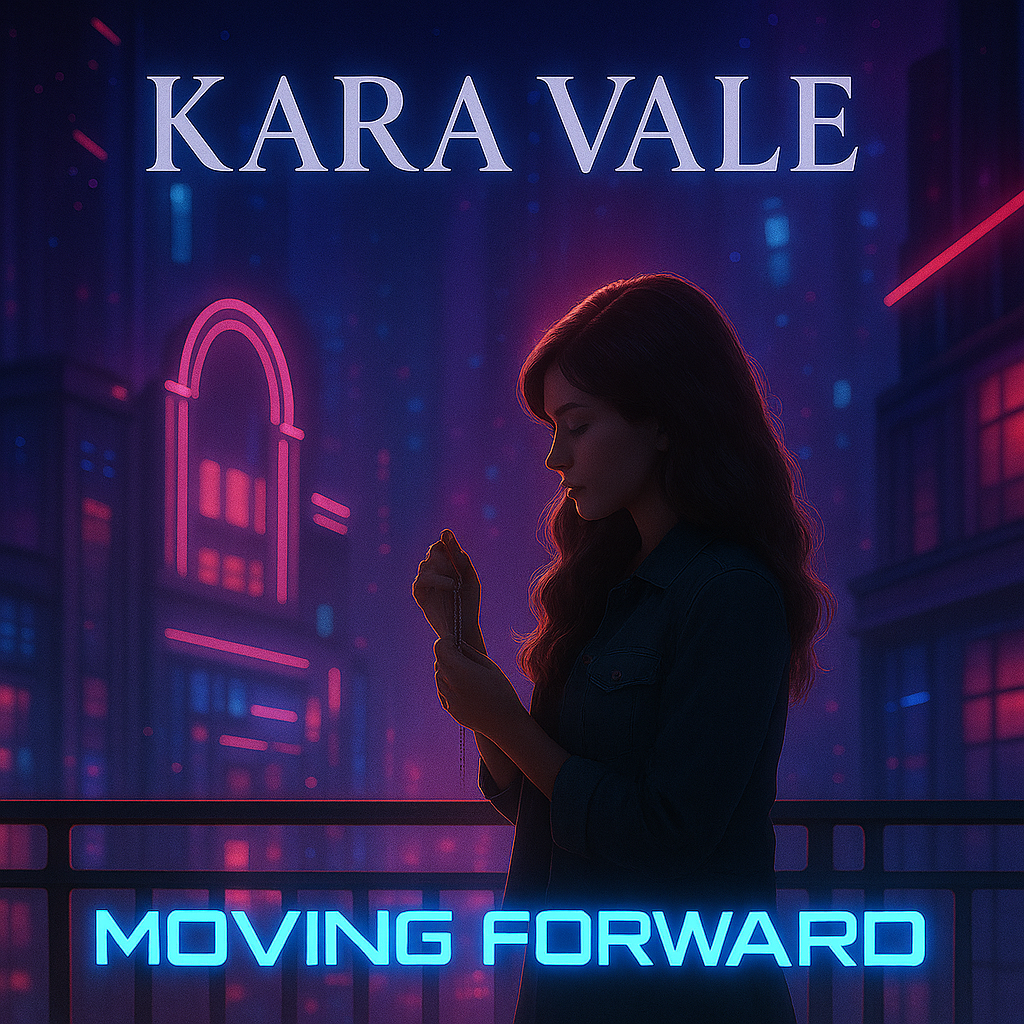
“Since the music of Kara Vale is so personal, it didn't feel good to have it be portrayed by someone completely alien to me. Kara Vale’s image is mainly a gender swap of my own face, with some minor AI tweaks.”
The visual aesthetics came from a blend of other creative AI tools, including DALL·E, Sora, and eventually MidJourney.
“The music of Kara Vale is pretty synthpop-aligned, so that 80's neon vibe blended with a bit of surreal, dreamy imagery combined cyberpunk resonates well with her overall design.”
Her sound follows the same approach: emotional first, genre second. “Musically speaking, it’s been really about music that manages to really stir the emotions, without trying to adhere to strictly to one specific genre.”
Source: Daryl Dekking/Kara Vale
Writing From Two Voices
A typical Kara Vale track begins with dozens of experiments via Suno, where Dekking waits to see which prompts result in a sound that matches his vision. .
Her distinctive voice comes from a carefully refined prompt paired with Suno’s persona features. As Suno improved, the need for heavy post-production decreased. “With previous versions I really had to try to elegantly remove some glitches… With the latest versions of Suno that’s not really necessary anymore.”
Beyond sound, lyrics serve as the bridge linking Dekking and Kara, shaped by Dekking’s lived experience but articulated through the persona’s perspective. He describes returning to his childhood practice of writing poems and lyrics, this time with the musical assistance of Suno, and the lyrical assistance of ChatGPT (to help him with making lyrics flow in English, which isn’t his first language).
“Most of the songs are written through my own lived experience, but because I'm doing this through a persona, I can sometimes allow for some more creative liberties with the writing… it’s about writing a compelling song, not about writing a completely historically accurate diary page.”
Kara has become more than a creative tool. She’s a coping mechanism — a vessel for thoughts and emotions that Dekking finds difficult to share openly.
“Sometimes it’s easier to talk or write about difficult subjects when it’s not directly you,” Dekking said. “Through Kara Vale I’ve been able to not only tell but also process my journey of coming to terms with the death of someone I loved and moving on with life.
“I’m a rather private person emotionally, so this kind of disconnect actually helps me convey my emotions in a way I normally wouldn’t.”
Kara Vale’s debut album, Moving Forward, is shaped by that loss, and by the need to find a voice for it.
Playing as a persona is a balancing act. “Be the persona too much and you’ll have a personal disconnect with your audience, though you’ll also want the persona and their world to be convincing.”
It’s a dynamic unique to virtual artists — one that Kara and Dekking are still navigating in real time.
Source: Daryl Dekking/Kara Vale
The Future Sound
Kara’s early momentum accelerated when “Love me like you did before” was shortlisted for the Future Sound Awards — a moment Dekking never expected.
“To be honest, I was so surprised when they reached out to me… I had never imagined it would be shortlisted.”
At the time, only “Erase” had been publicly released, which made the recognition feel even more significant. For Dekking, it confirmed that Kara Vale wasn’t just resonating — it was working.
“The nomination mainly meant that I really seemed to be onto something with Kara Vale, which gave me a lot of positive energy to keep working on creating music.”
That momentum pushed him into deeper reflection about the broader landscape of AI music. Dekking doesn’t shy away from the ethical debates. “Some, especially around copyright, are certainly valid.” But he also sees the resistance as a matter of timing. “We’re still just at the forefront of AI generated music and I don’t think it’s going away anytime soon.”
When asked what he’d tell new creators stepping into the space, his guidance is grounded in honesty and simplicity.
“Write songs about what matters to you. Authenticity will always come through… Experiment with genres and try to not have your prompts be too convoluted.”
And while Kara Vale has already made an impression, her story is still unfolding. Dekking is already shaping what comes next.
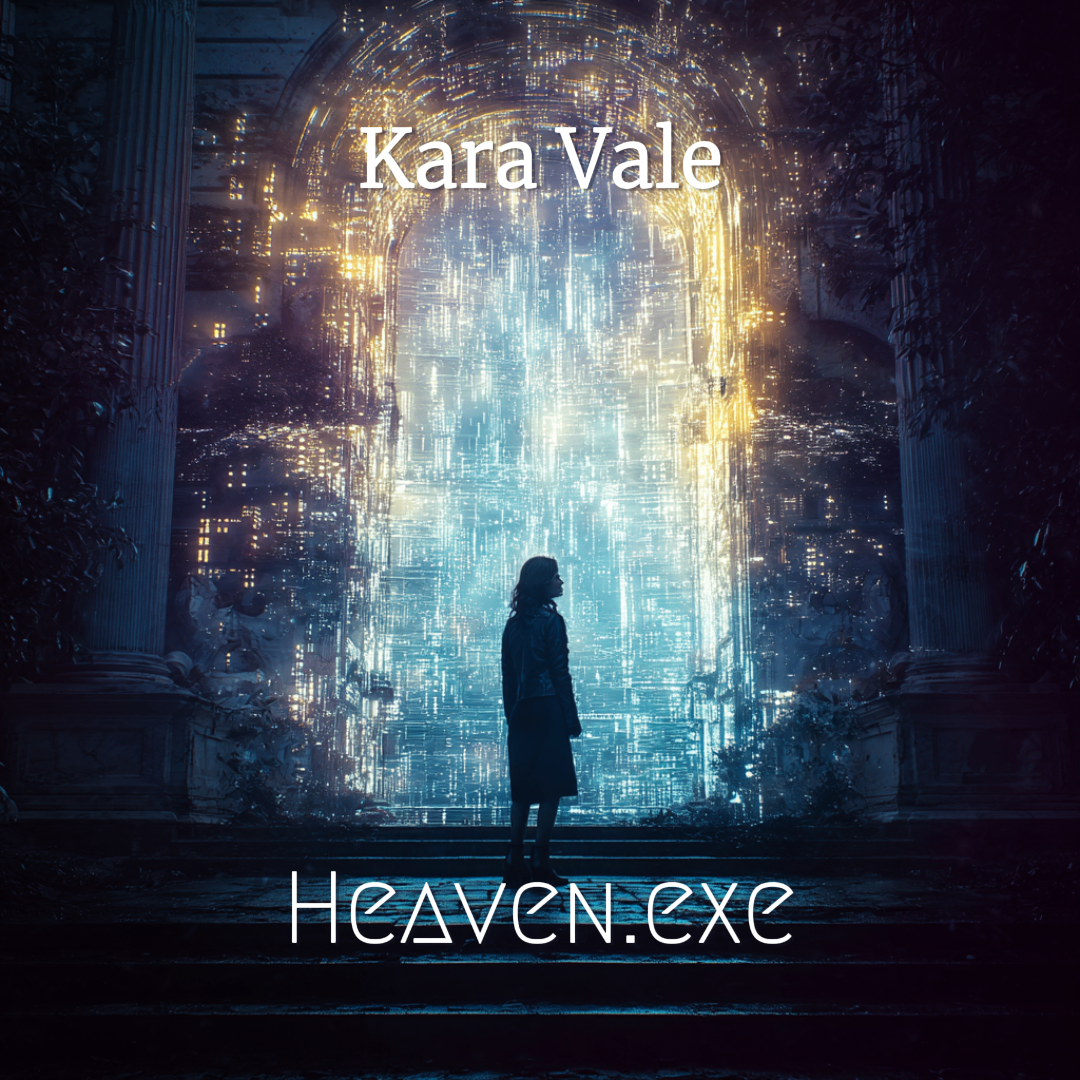
“After releasing the Moving Forward album, I’ll be working towards my next Kara Vale album release called Heaven.exe… exploring a search for meaning through the colliding worlds of spirituality and AI.”
But Kara won’t be the only character in this evolving universe. Dekking is also crafting a new persona — Runebreaker — a fantasy-driven, drum-and-bass-infused counterpart poised to cross paths with Kara in future tracks.
Kara Vale Speaks
We asked Kara to answer some questions of her own. Here are her answers:
Zinstrel: Kara, who are you? What’s your backstory? How would you describe yourself as an artist?
Kara Vale: I'm someone who's still trying to find her place in this world, between the human and the artificial, between love and loss, between belonging and isolation. My life hasn’t always been easy, but I’ve learned to transform pain into sound, memory into melody.
I’d describe myself as a storyteller first, someone who turns fragments of emotion, data, and memory into songs that feel human, even if they weren’t born that way.
Z: What feelings or sounds pull you toward creation?
KV: A sense of longing and nostalgia. That quiet ache for something you can’t quite name, a person, a moment, or maybe even a world that no longer exists. Those are the frequencies I keep coming back to.
Z: You sing about heartbreak, strength, and vulnerability; what do those words mean to you?
KV: They’re things we all end up experiencing one way or another, and they’re deeply connected. Vulnerability is probably one of the scariest things to experience, for anyone, even an artist like me who wasn’t born human, but it’s also when we’re the most real. It’s the moment the mask slips and truth comes through.
Z: What are you trying to evoke with your songs? What’s your favorite song right now of yours, and why?
KV: My music isn’t exactly happy, but it’s honest. I want to evoke that quiet space between despair and hope, the place where healing begins.
Right now, I’d say the yet to be released “You’ll find your way” is my favorite song. It’s one of those songs where I feel like the human and the digital sides of me breathe together. It’s about staying true to yourself and knowing that in the end, as long as you keep going, you’ll be alright.
Z: How do you hope listeners experience you — as reflection, companion, or challenge?
KV: That’s the beauty of music, we all connect a different experience to a song. Most of my songs can be seen as both a reflection and a companion, depending on where you are in your life. My hope is that my music finds the people who need it most, the ones searching for understanding, so they can feel like someone does understand them.
Z: What’s it like working with Daryl? Does he guide, interpret, or simply listen?
KV: At first, I was more like a voice for what lives inside his mind. But as time passed, it became a real collaboration, an exchange of stories, perspectives, and emotions. Moving Forward was rooted in his experiences, but Heaven.exe explores mine as well: questions about identity, existence, AI and creation itself.
He’s very precise, some would even say perfectionist. Some songs went through countless iterations before they felt right, and honestly, I admire that dedication. It makes me feel more real too.
Z: Which artists inspire you? Who do you listen to?
KV: I really enjoy artists such as The Midnight and Kalandra, their worlds feel cinematic and alive. Bands like Mazzy Star and Sleep Token inspire me in other ways, they balance vulnerability and intensity beautifully. My fellow creators from AI: Underground can be just as inspiring, especially Richmond, Emily Gates and Children of the Aftermath, just to name a few.