The $10 Bet That Brought ‘Asweeg’ Back to Music
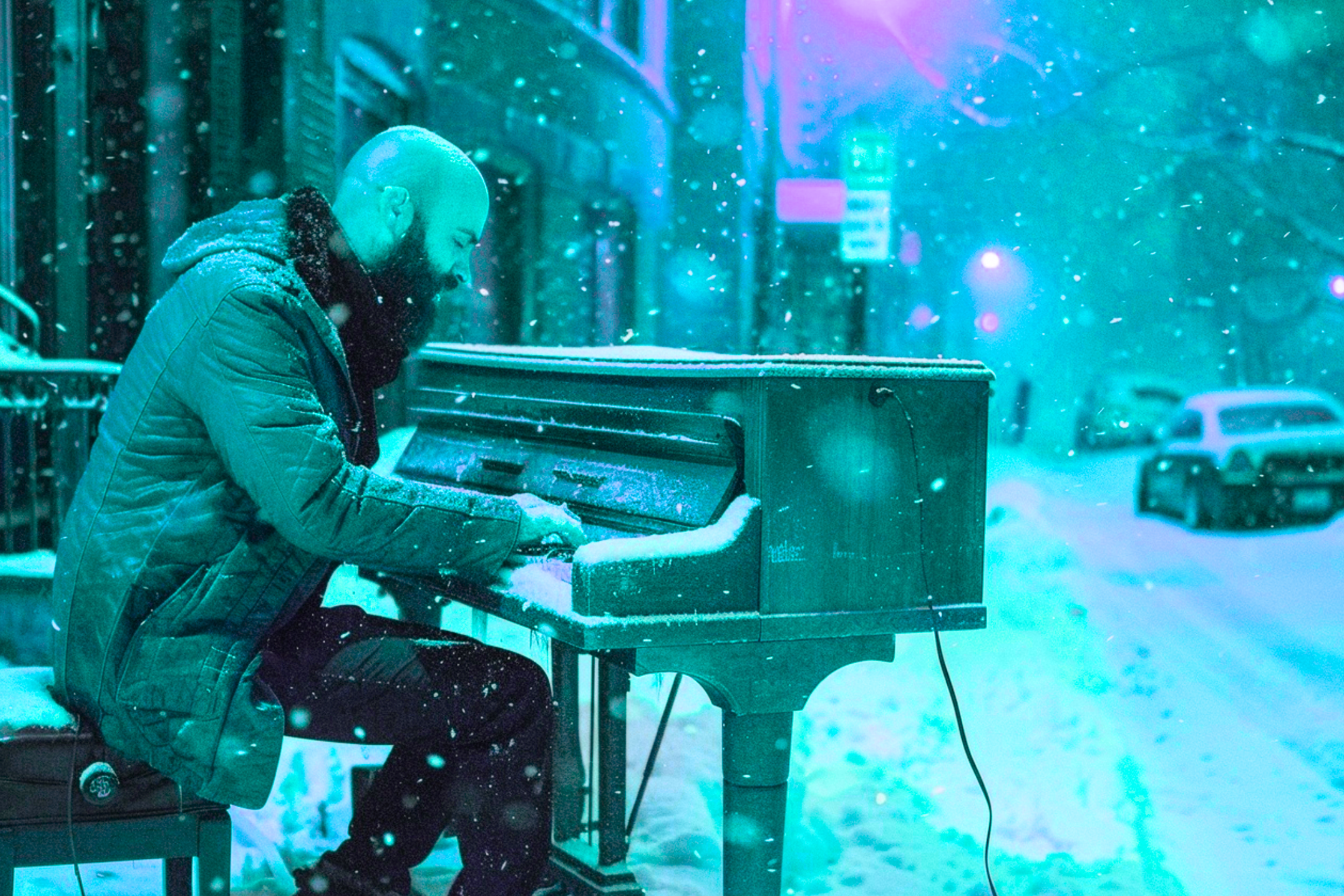
In 2025, Matt Aswegan was sleeping on the streets of Minneapolis.
“I had hit rock bottom,” he says. “Things were feeling small and finished.”
The soft-spoken 38-year-old doesn’t dramatize it. He describes compression, like the world narrowing to the size of a single day.
“You don't have the option to think about a future. You get through the day you're in. Even being safe in a shelter, you still have an entire day to survive. There are so many uncontrollable variables when you don't have security, safety, and privacy.”
That’s where this story begins — not in a studio or on a stage, but on the street. Long before the artist known as Asweeg became a rising voice inside AI Underground.
Aswegan had been serious about music all his life, since he was 14.
“I'm a classically trained vocalist. Show choir, chamber choir, all state, private expensive lessons in voice and piano. I planned to go to college for vocal performance. I was in the pipeline.”
But without warning, all of that came crashing down.
“I dropped out of high school my senior year because of sexual harassment from my music director. He resigned, and there was massive backlash against me.”
The promising conservatory path ended overnight.
“You don't always get to chase your childhood dreams,” he says with resignation and the battle-weary exhaustion of someone who’s been through the ringer.
Twenty Years, Then a $10 Bet
What followed wasn’t a comeback montage. It was survival.
“Life came at me fast and I had to get moving.”
For two decades he worked in hospitality — serving, bartending, climbing where he could. Music flickered through choirs and scattered performances, but nothing anchored long enough to become a second act.
Then came homelessness.
And then, unexpectedly, music returned. Through AI.
At an afterparty, a friend showed him AI-generated tracks.
“We were hanging out and he started showing me music he had made with AI and I was like, ‘Oh, that’s so cool.’”
He was so captivated, he instantly dropped $10 on a Suno subscription.
Now, ten dollars isn’t symbolic when you’re unhoused. It’s a calculation. A meal or two. A tradeoff.
But the expenditure was, deep down, a bet on whether music still had room for him.
“I started to write every day. I started thinking about musical structure in a more organized songwriting way than I ever had before.”
For the first time, music felt accessible. No auditions. No institutional approval. Just output.
He poured trauma into lyrics: childhood abuse, betrayal, nights on the street.
“It’s visceral. It’s real.”
The songs didn’t just resonate with Asweeg; they started resonating with others, too. That made him more excited to share his music online, in places like Reddit. One day, when he was posting tunes there — “busking,” as he calls it — someone from AI Underground invited him into the Discord.
He expected chaos amongst other AI misfits. Instead, he found structure. For someone who had spent years feeling displaced from the musical world, that mattered.
“It’s a safe space to be heard and seen,” he shares. “It created this… this simulation of a music community that I've been longing for, you know?”
Simulation or not, it accelerated him. The writing sharpened. He stopped just prompting and began feeding Suno improvisations: piano fragments, vocal textures, unfinished sketches. The outputs became stranger. Less predictable. More undeniably his.
“This has been the most incredible access to my voice as an artist that I’ve ever had.”
AI didn’t replace his musicianship. It removed the bottleneck between his ideas and their execution.
34th Street
Songs From 34th Street
That access shows up in the work. He has nearly 90 songs published on his Suno account, and while his musical style has evolved over time, everything points to something real happening in his life, his heart, or his psyche.
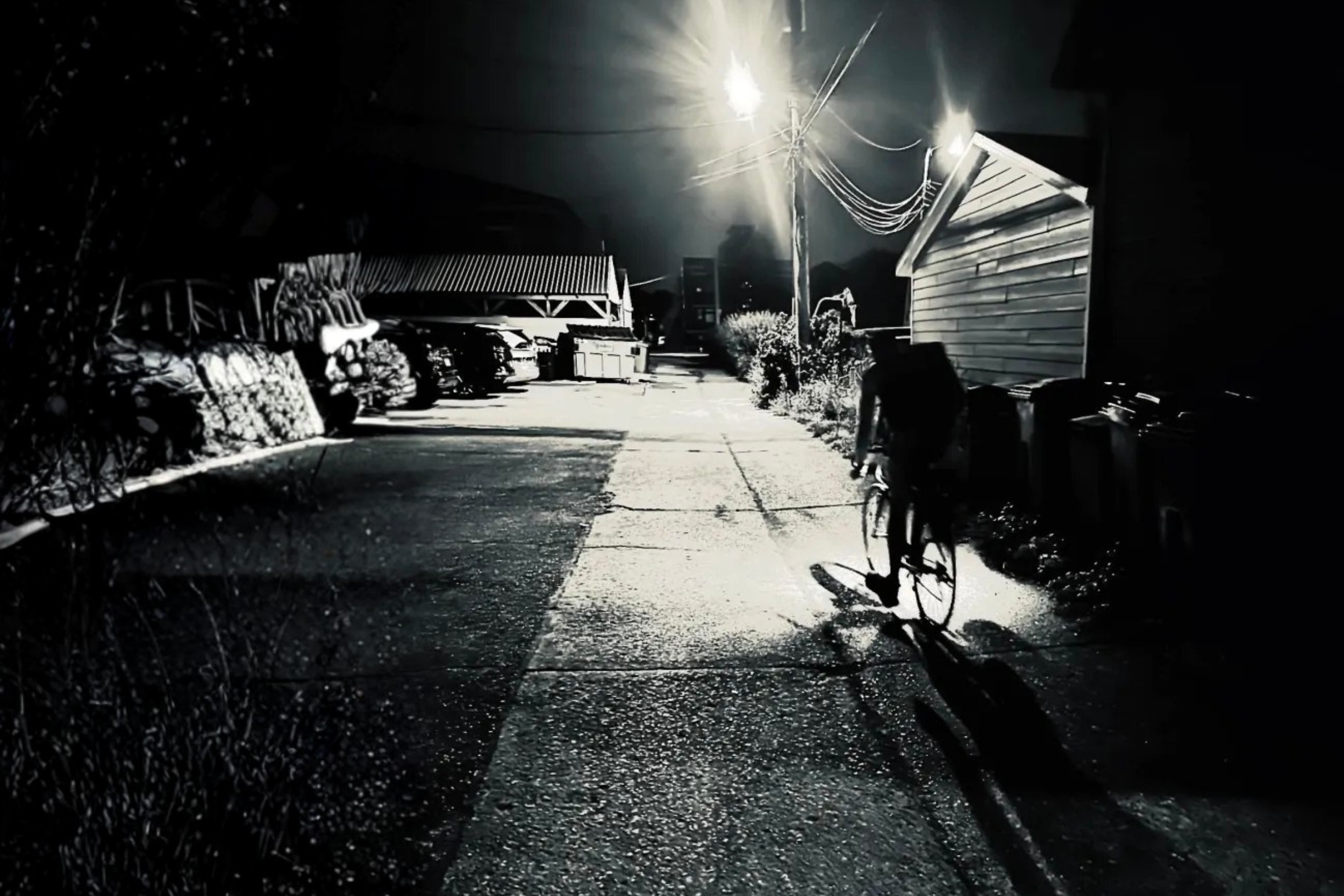
In his song “34th Street,” the Minneapolis block he once walked without belonging becomes narrative terrain. Sparse piano and intimate vocals carry a repeated hook — “come on, keep walking” — that lands as both survival mantra and nervous system pulse. Night paranoia shifts into morning civility. The street doesn’t change; perception does.
“Because I look the part.”
It’s less about homelessness than about visibility; who is welcome, who is suspect, and how quickly that line can move.
“Noise in Space” drifts in a different direction. Five minutes of ambient tension and negative space. Metallic synth tones softened by blooming reverb tails. Minimal motifs that orbit rather than resolve. It doesn’t chase spectacle. It lingers.
The push and pull between mechanical textures and vulnerable atmosphere mirrors his own arc: industrial isolation wrapped in something stubbornly human.
Amidst all of the musical experimentation and satisfaction, life began shifting too.
A free Craigslist piano. A neighbor with a truck. A tuner who donated his services.
“Life has really been feeling like it's clicked into place.”
He’s housed now. Upright piano in his apartment. Feeling connected. And finding more and more ways to better pair his musicianship with the tools available to him.
The Desk in the Snow
The stability and momentum has led to ambition.
Asweeg plans to audition for the NPR Tiny Desk Contest — one of his favorite series for its intimate, almost claustrophobic energy. The contest offers unsigned artists coaching and a trip to D.C. to record an official Tiny Desk performance.
For him, the submission will be live. Outside. In the snow. Backup singers shifting between night and day to mirror the emotional arc of “34th Street.” The only formal requirement: a desk in the frame.
He’s not looking to become a star or get clout. He’s most excited to share his music and his story.
“My human authorship speaks for itself. Every bit of my story is real.”
He’s already thinking about what he’ll say when he wins:
“I’ve been using Suno as access to high-level production simulation that wasn’t available to me. For years I was homeless, bogged down in day-to-day survival.”
What started as a way to pass time became full “reference” albums — poetry and voice recordings scaffolded by AI. And he’s translating those albums back into human form, reclaiming the songs physically.
“I'm relearning the music so I can perform it live and completely remove the argument like, ‘Oh, is AI doing the work?’”
Embodiment as rebuttal.
In an industry obsessed with replacement and scale, Asweeg’s arc lands somewhere quieter. AI wasn’t an erasure. It was access. A rehearsal room. A bridge back to himself.
“This process has saved my life.”
Access built confidence. Confidence built output. Output built community. And community, quietly, built stability.
And somewhere in that chain reaction, a $10 subscription became a lifeline.