AI Band Breaking Rust is #1 on a Billboard Country Singles Chart
Source: Breaking Rust YouTube
For the first time ever, an AI-generated artist has hit No. 1 on a Billboard country chart. The song “Walk My Walk,” by the mysterious country act Breaking Rust, now leads Billboard’s Country Digital Song Sales ranking for the week of November 8, 2025.
The Country Digital Song Sales chart ranks the best-selling country songs in the U.S. based solely on digital downloads, meaning every paid purchase from platforms like iTunes or Amazon counts toward an artist’s position.
In contrast, the Country Streaming Songs chart (which Breaking Rust is not on) reflects which tracks are being played the most on streaming platforms such as Spotify, Apple Music, and YouTube. While the digital chart highlights fans who are still buying individual songs, the streaming chart measures overall listening behavior across millions of plays. As a result, digital sales often capture bursts of fan support around new releases or special promotions, while streaming rankings reveal broader, long-term popularity.
Regardless of the staying power of this achievement, it’s a big one, that comes on the heels of Xania Monet’s R&B charting success.
What is Breaking Rust?
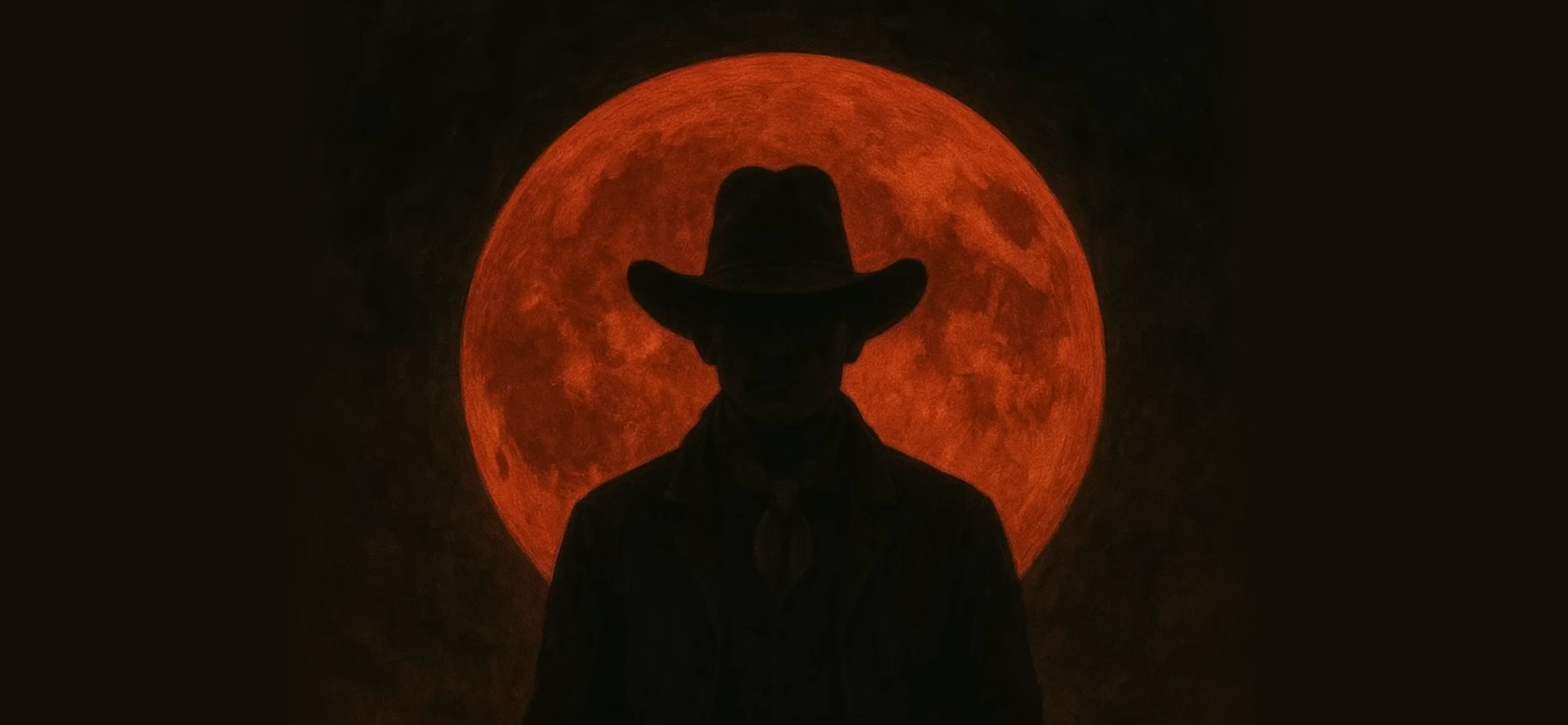
The artist’s online persona features a lone cowboy figure — stubble, hat, necktie — brooding across a series of cinematic black-and-white photos. On Instagram, more than 35,000 followers buy into the melancholy mythos; on Spotify, over 2 million monthly listeners stream songs like “Livin’ on Borrowed Time” and “Whiskey Don’t Talk Back.”
Breaking Rust describes itself only as “music for the fighters and the dreamers.” Its aesthetic is weathered Americana with digital DNA — the sound of country grit meeting cloud servers.
Each track feels crafted from Nashville tropes and neural nets alike: steel-string twang meets ambient synth pads, heartbreak lyrics arranged with AI precision. Fans and critics alike are debating whether this marks a new sub-genre — neural country, AI honky-tonk, robo-roots — or just the next phase of algorithmic pop.
But make no mistake: this isn’t an obscure viral gimmick. Millions are streaming it, and Billboard recognized it.
Songwriting credits listed on Spotify
Who is behind Breaking Rust?
Who exactly is behind Breaking Rust? The artist’s online persona features a lone cowboy figure with stubble, hat, and necktie, brooding across a series of black-and-white photos, but as far as real-world connections go, there’s shockingly very little.
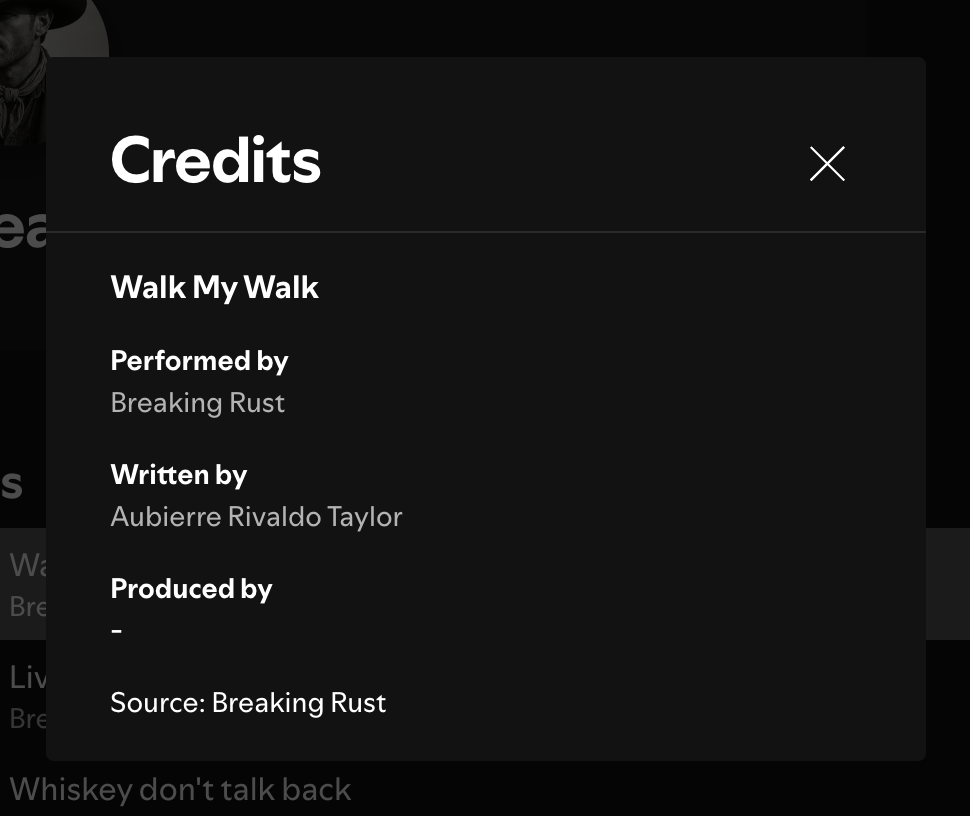
Breaking Rust’s songwriting credits list an Aubierre Rivaldo Taylor, a name also attached to the tongue-in-cheek AI country project defbeatsai, which has racked up nearly 125,000 monthly Spotify listeners. Breaking Rust, meanwhile, boasts more than 2.1 million.
Despite the streaming success of these AI entities, there’s little to confirm whether Taylor is a real person, a pseudonym, or even an invented persona used for crediting purposes.
No matching records appear in songwriter databases like BMI or ASCAP, and there’s virtually no verifiable information — no background, no location, no history — linking Taylor to any known artist or label.
Even the author’s name itself feels suspiciously constructed. “Aubierre,” not a common first name, could be incorrectly translated from French as “from the beer,” suggesting either a joke or a creative alias. Additionally, with all three parts (Aubierre, Rivaldo, Taylor) reading like surnames, it may be a partnership, composite or coded identity. For now, whoever is behind Breaking Rust seems to prefer remaining in the shadows.
How big of a deal is this?
The news has hit Nashville like a wrecking ball, with most industry watchers sharing the news with astonishment, incredulity, and a smattering of fear. Veteran artists and songwriters, already wary of AI’s encroachment, see the milestone as a wake-up call — even high-profile names like Elton John and Dua Lipa have publicly urged for tighter regulations around AI in music.
So does that mean an AI artist is now the most popular act in country? Not exactly. Although it’s a big moment for AI music, it’s hardly indicative of a country music takeover.
Since Breaking Rust appears on the Country Digital Song Sales chart but not on the Country Streaming Songs chart, the most likely conclusion is that its popularity comes from fan purchases, not widespread listening.
That usually means the artist (or their fanbase) mobilized around a specific goal, like pushing downloads to hit a chart debut. And that despite millions of streams on Spotify, the song has yet to achieve broad streaming traction to push it into other charts. It could also reflect demographics; older or more traditional country audiences tend to buy music rather than stream it.
So in essence, appearing on the digital sales chart alone signals active, loyal fans making purchases, but not necessarily mass exposure or viral reach. It’s a solid indicator of core support, not mainstream streaming success.
Compare Breaking Rust with AI-generated R&B artist Xania Monet, who became the first virtual act to debut on a Billboard radio airplay chart. In fact, the persona (built by verified human songwriter Telisha “Nikki” Jones), has appeared on five Billboard charts, highlighted by a No. 1 debut on R&B Digital Song Sales, a No. 30 entry on Adult R&B Airplay with “How Was I Supposed to Know?”, and additional placements on Hot R&B Songs (No. 20), Hot Gospel Songs (No. 21 for “Let Go, Let God”), Emerging Artists (No. 25), and Digital Song Sales (No. 22).
Although not quite as seismic as Monet’s entry into the mainstream, Breaking Rust’s appearance on the Billboard charts proves that there’s an audience for AI music, and that they’re willing to spend money to hear their new favorite songs.